For entrepreneurs and print shop owners just entering the garment decoration industry, the world of heat printing often begins with a clamshell or swing-away press. These machines are the workhorses of the small shop, perfect for one-off t-shirts and sample runs. However, as order volumes scale from dozens to thousands of units per day, the limitations of flatbed technology become a bottleneck. This is where the rolling heat press—often referred to as a rotary heat press, heat calendar, or roll-to-roll laminator—takes center stage.
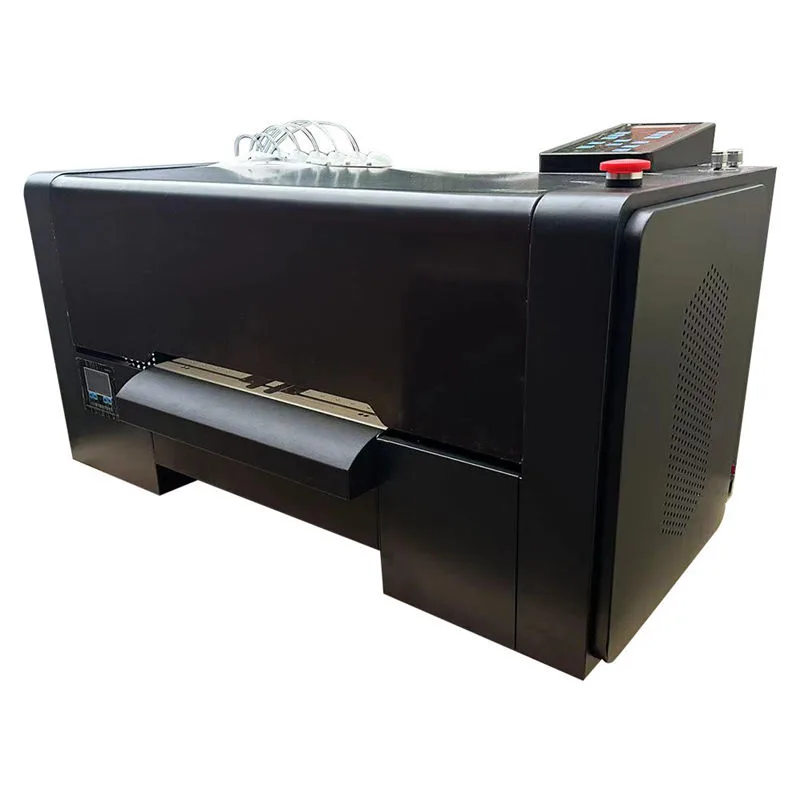
Unlike its static counterparts, a rolling heat press is an engineering marvel designed for continuous motion. It moves heat, pressure, and time—the holy trinity of transfer printing—across the substrate via a conveyor belt or heated rollers. This shift from batch processing to continuous flow is not merely an incremental upgrade; it is a fundamental change in manufacturing philosophy.
This guide dives deep into the mechanics, applications, and selection criteria for these industrial powerhouses, helping you determine if a rolling heat press is the strategic investment your operation needs to dominate the competitive landscape of textile finishing.
To appreciate the value of a rolling heat press, one must first understand its mechanical advantage over traditional flatbed systems. A standard heat press applies heat and pressure to a stationary object. In contrast, a rolling heat press treats time as a function of distance. The substrate moves through a heated zone at a calibrated speed, ensuring consistent energy transfer across the entire length of the material.
When industry professionals discuss rolling heat presses, they typically refer to two distinct mechanical configurations, each suited for different production styles.
The first is the rotary calendar, which is the gold standard for roll-to-roll dye-sublimation . These machines feature a large, heated drum (often filled with oil for superior thermal stability) and a heavy-duty silicone blanket or belt that presses the transfer paper against the fabric as they rotate around the drum. The pressure is applied by the tension of the blanket and the nip between the rollers. These systems are built for massive throughput, handling widths of up to 120 inches or more for home furnishing fabrics.
The second configuration is the conveyor / flat-draw roller press. These machines utilize a Teflon-coated or silicone conveyor belt that carries garments or cut pieces through a heating tunnel or under a series of infrared panels and rollers . These are more common in shops that handle a mix of cut-piece work (like individual t-shirts) and limited roll goods. The conveyor system allows operators to “set it and forget it,” feeding one garment after another without waiting for a platen to open and close.
The method of heating in a rolling press differs significantly from a flatbed. A standard clamshell relies on conduction—direct contact with a hot platen. A rolling heat press, particularly conveyor models, often utilizes forced convection and infrared radiation.
As the material travels through the machine, it is enveloped in heat. High-end rolling presses use PID (Proportional-Integral-Derivative) controlled infrared elements that maintain a temperature variance of less than ±5°F across the entire width of the belt . This is crucial for sublimation, where temperature spikes can scorch polyester, and low spots can result in ghosting or incomplete gas transfer. The continuous movement also prevents the “halo” effect sometimes seen on flat presses, where the edge of the platen leaves a mark on soft-shell materials.
The versatility of the rolling heat press is what justifies its place on the production floor. It is not limited by the thickness of a single platen or the dimensions of a lower base.
Dye-sublimation is a finicky chemical process that requires dry heat to convert solid ink particles into a gas. This gas must then permeate the polymer structure of the fabric. Rolling heat presses excel here because the extended dwell time (the period the material spends in the heat zone) allows for a complete and thorough gas transfer .
For sportswear manufacturers producing thousands of meters of running vests or basketball jerseys, the rolling press ensures that every inch of the fabric, from selvedge to selvedge, receives the same energy input. This consistency is impossible to achieve with a flat press on a continuous roll of fabric.
Beyond fashion, rolling heat presses are critical in the production of technical textiles. This includes laminated foam for automotive interiors, heat-bonded insulation panels, and even geotextiles. These machines often function as laminators, using heat and pressure to fuse multiple layers of materials with hot melt adhesives .
For example, in the production of insole board or shoe padding, a roll-to-roll heat press can continuously bond a fabric layer to a foam core, simultaneously pressing and setting the adhesive. The precision pressure control on these industrial units prevents crushing delicate foam structures while ensuring a permanent bond .
Interestingly, the rolling heat press concept scales down as well. In the apparel industry, “tagless” labels (where care instructions are printed directly onto the neck of the garment) are often applied using small, specialized roll-to-roll systems. These machines handle rolls of transfer film and feed garments through in a continuous stream, applying the small label in a fraction of a second . This demonstrates the technology’s adaptability, proving it is just as useful for micro-applications as it is for billboard-sized banners.
Investing in a rolling heat press is a significant capital expenditure. To ensure a return on investment, buyers must look beyond the marketing brochure and scrutinize the engineering specifics.
The heart of any rotary calendar is the heated drum. Cheaper models rely on simple rod heaters embedded in the roller, which can create hot spots. Industrial-grade machines often utilize oil-circulating systems . Oil holds thermal inertia. It heats up slowly but maintains a perfectly even temperature across the drum surface because the oil is constantly moving, wicking heat away from hot spots and delivering it to cooler areas. When buying a machine, ask about the “ΔT” (Delta Temperature) across the roller surface. A high-quality machine should boast a variance of less than 1-2 degrees Celsius from one end of the roller to the other.
In a flat press, pressure is a function of the toggle mechanism. In a rolling press, pressure is a function of the nip—the gap between the rollers. Look for machines with servo-motor controlled gap adjustment. This allows for micron-level precision in setting the distance between the rollers, which is essential when working with materials of varying thicknesses without crushing the texture .
Furthermore, the pressure must be maintained dynamically. As the machine heats up, metal expands. Advanced rolling presses feature automatic compensation systems that detect this expansion and adjust the roller gap in real-time to maintain consistent pressure, a feature often listed as “hydro-pressure regulating system” in high-end specs .
For conveyor models, the belt is the component that takes the most abuse. A misaligned belt will drift, causing wrinkles and jams. High-end machines feature automatic belt tracking systems that use pneumatic pistons or sensors to keep the belt perfectly centered. Additionally, digital tension control ensures that the belt is tight enough to hold the material flat but loose enough to prevent stretching and premature wear . Ask about belt replacement intervals and costs before purchasing; a cheap machine with an expensive, hard-to-find belt is a liability.
The sticker price of a rolling heat press can be daunting—ranging from $8,000 for entry-level conveyor models to over $50,000 for fully automated industrial calendars . However, the calculation should be based on cost per unit, not upfront cost.
A manual swing-away press requires an operator to load, pull the handle, wait, and unload. This cycle might yield 20-30 garments per hour. A pneumatic flat press might double that. However, a conveyor rolling heat press allows one operator to simply place garments on the belt end-to-end. While one shirt is being pressed, the operator is already positioning the next. This can yield throughput of 100 to 500+ garments per hour depending on belt speed and size .
For a shop producing 1,000 units of a single design, the rolling press might complete the job in a single shift, whereas a battery of flat presses might take two days. That labor saving directly impacts the bottom line, allowing the shop to take on more jobs and turn them around faster.
Modern manufacturing is about data. If you are supplying to large corporations or athletic brands, they may require proof that the garments were processed at the correct temperature and pressure to ensure quality control. High-end rolling heat presses now come with PLC (Programmable Logic Controller) control systems and touchscreen interfaces that log every job . They can store recipes for different materials (e.g., “Polyester White – 400°F / 3.0 FPM”) and generate reports. This “Industry 4.0” capability transforms the heat press from a simple tool into a data-generating asset that validates quality assurance for your clients.
A rolling heat press is a mechanical system under constant thermal and physical stress. Without a rigorous maintenance schedule, performance will degrade.
Rotary presses accumulate adhesive residue and dye buildup on rollers and belts. This buildup acts as an insulator, preventing heat from transferring efficiently to the substrate. It can also transfer back onto future light-colored garments. Operators must clean rollers with approved solvents like acetone after each use or shift to prevent hard buildup . Never use abrasive pads that could scratch the precision-ground surface of the roller, as scratches will create permanent imperfections in the finish of your prints.
The bearings that support the heated rollers operate in a hostile environment. Heat breaks down grease. Maintenance schedules for rolling presses require strict adherence to lubrication intervals—often weekly greasing of bearings and chains . Ignoring this leads to “flat spotting” on bearings, which causes the roller to vibrate, leading to uneven pressure and banding on the printed material.
Over time, thermocouples drift. It is vital to perform monthly surface temperature checks using an infrared thermometer to verify that the temperature displayed on the control panel matches the actual roller surface temperature . If a discrepancy exists, recalibration is necessary to avoid ruining expensive materials.
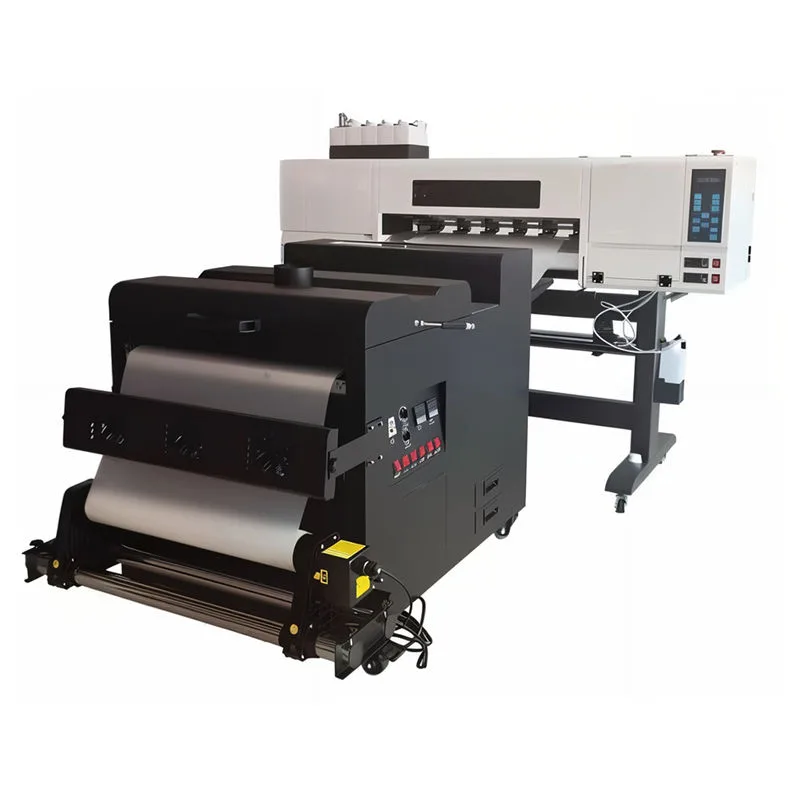
The decision to move to a rolling heat press marks the transition from a craft-based business to a volume-driven manufacturing operation. If your daily output consistently exceeds the capacity of your flat press operators, or if you are moving into long-run roll goods like sportswear fabric or signage, the rolling heat press is not just a tool—it is the engine of your growth.
It demands a higher skill level for setup and maintenance, but it rewards that investment with unmatched productivity and consistency. By focusing on critical specifications like heat uniformity, pressure control, and build quality, you can select a machine that will provide a decade or more of reliable service, turning raw materials into finished goods with an efficiency that keeps you competitive in the fast-paced world of digital textile printing.

Guangzhou Baiyin Electronics Co., Ltd
PRODUCTS
COMPANY